A timed puzzle, hidden clues, and shared decisions create a setting where teams rely on logic and communication to move forward. Problem-solving puzzle games place participants in situations that demand focus, analysis, and teamwork under pressure. These activities turn abstract thinking into active participation that groups can experience together.
As each step reveals new information, teams learn how observation, discussion, and strategy shape outcomes. This type of challenge strengthens collaboration and sharpens thinking skills in ways traditional activities rarely achieve within group environments.
Escape Room Challenge
An escape room stands as one of the most immersive problem-solving puzzle games for groups. Participants enter a themed environment filled with locked boxes, coded messages, and layered puzzles. Every object may connect to a larger solution, which encourages careful observation and discussion.
The time limit creates urgency that pushes teams to communicate clearly and divide tasks efficiently. Players must analyze clues, test ideas, and adjust plans when needed. This activity mirrors real workplace collaboration and sharpens logical reasoning. Many groups interested in team building in Denver, CO choose this experience because it blends entertainment with meaningful teamwork.
Puzzle Relay Race
A puzzle relay race divides participants into small groups that solve different puzzles in sequence. Each completed challenge unlocks the next stage for another teammate. This format teaches participants how individual effort contributes to a shared objective. Team members depend on one another’s accuracy and speed to move forward.
The structure also encourages communication, as each person must explain their solution before passing control. This game promotes accountability and shared success. Teams learn how progress relies on cooperation and clear thinking, which mirrors collaborative environments in offices, classrooms, and project-based settings.
Logic Grid Puzzles
Logic grid puzzles require teams to interpret clues and eliminate incorrect possibilities through reasoning. Participants work together to organize information into patterns that reveal the final answer. This activity strengthens analytical thinking because success depends on patience and attention to detail.
Team members often debate interpretations, which leads to thoughtful discussion and shared understanding. These puzzles reward structured thinking and organized communication. As players narrow down options, they learn how methodical analysis leads to accurate conclusions. This type of puzzle builds habits that transfer well into real-life problem-solving situations.
Mystery Box Challenge
In the mystery box challenge, teams receive sealed boxes filled with random objects and written clues. Participants must determine how the items connect and solve the puzzle before time expires. This activity promotes creative thinking, as the solution rarely appears obvious at first glance. Teams must discuss ideas openly and test different approaches.
The challenge highlights how diverse perspectives lead to faster solutions. Players practice observation, deduction, and cooperation while handling unfamiliar tasks. This format encourages flexibility and patience, both of which help teams navigate complex problems together.
Code Breaking Game
A code breaking game introduces participants to encrypted messages that require decoding through patterns, numbers, or symbols. Teams analyze sequences and test combinations to uncover hidden meanings. This activity develops pattern recognition and logical reasoning. Communication plays a key role, as participants must share discoveries and track progress collectively.
The process of testing, adjusting, and retesting builds persistence and structured thinking. This type of challenge feels similar to solving layered puzzles inside Denver escape rooms, where codes often guard important clues that lead to the next breakthrough.
Blindfold Navigation Puzzle
In this activity, one participant wears a blindfold while teammates guide them through a simple obstacle course using verbal instructions. The success of this game depends entirely on communication and trust. Teams must give precise directions and listen carefully to avoid mistakes.
Participants learn how clarity and patience influence results. This challenge emphasizes the value of listening as much as speaking. Groups often find that misunderstandings reveal the importance of thoughtful communication.
Riddle Chain Game
The riddle chain game presents teams with a sequence of riddles where each answer unlocks the next clue. Participants must interpret language carefully and think creatively to move forward. This activity promotes collaborative thinking because multiple perspectives often lead to faster answers.
Teams discuss interpretations, debate possibilities, and test solutions together. The progressive nature of the riddles creates momentum and shared excitement. Players sharpen verbal reasoning and pattern recognition while learning how teamwork accelerates progress.
Pattern Recognition Challenge
This game presents teams with visual or numerical patterns that they must decode within a set time. Participants analyze sequences and look for repeating structures that reveal the solution. The challenge builds observation skills and encourages careful examination of details. Team members often divide tasks, with some tracking patterns while others test solutions. This division of roles mirrors effective teamwork. The activity also teaches patience, as quick guesses rarely lead to correct answers. Structured thinking becomes the key to success, which benefits teams in professional and academic settings.
Strategy Board Puzzle
A strategy board puzzle requires teams to move pieces across a board using rules that restrict movement. Participants must plan steps ahead and predict outcomes before acting. This activity promotes forward thinking and group discussion.
Teams learn how planning reduces mistakes and saves time. The puzzle encourages thoughtful collaboration, as each move affects the entire group’s progress.
Clue Hunt Challenge
The clue hunt challenge scatters written hints across a room that teams must locate and interpret. Participants search the environment while discussing discoveries with teammates. This activity blends physical movement with mental analysis.
Teams must organize information and determine how clues connect. The game promotes observation, memory, and communication. Participants experience how sharing discoveries leads to faster solutions. Groups often enjoy this format because it resembles the experience inside an escape room, where hidden clues guide progress toward the final objective.
Timed Puzzle Assembly
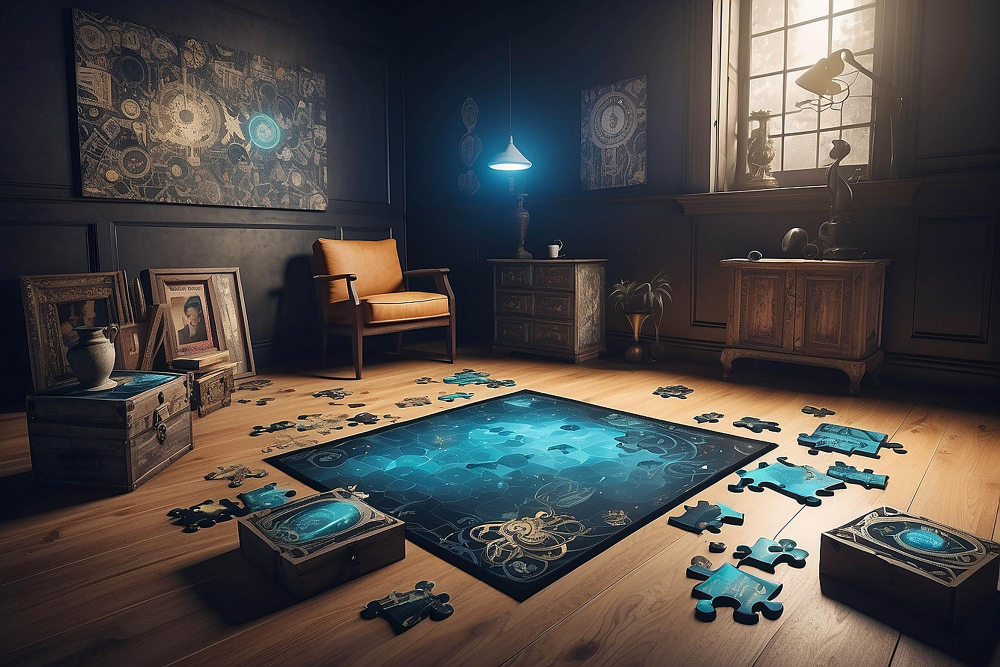
In this activity, teams assemble a complex puzzle under a strict time limit. Participants divide tasks, communicate progress, and assist one another when challenges arise. The time pressure teaches focus and cooperation.
Players learn how patience and teamwork influence results more than speed alone. This challenge demonstrates how organized effort leads to success. Many groups finish this game with a better understanding of how collaboration shapes outcomes.
Experience These Challenges Firsthand at EscapeWorks Denver
At EscapeWorks Denver, we design immersive rooms that bring these problem-solving puzzle games to life through themed challenges and collaborative puzzles. Our five unique experiences welcome groups of all skill levels in a clean, engaging setting built for teamwork.
Call us, submit a contact form, or book your room here to plan a memorable group challenge today.